Symptoms that don’t match the imaging
Fatigue, numbness or tingling, balance and coordination changes, muscle weakness or spasticity, symptoms that can fluctuate day to day even when MRI findings haven’t changed.
Multiple Sclerosis
The fatigue that hits by early afternoon no matter how much you slept. The numbness or tingling that comes and goes in a hand or leg. The balance that’s just a little off some days. Your neurologist has you on a disease-modifying therapy, and your scans look stable, but the day-to-day symptoms are still running your life. There is a different way to support multiple sclerosis: treat the nervous system’s circulation and signaling directly, alongside your DMT.
Fatigue, numbness or tingling, balance and coordination changes, muscle weakness or spasticity, symptoms that can fluctuate day to day even when MRI findings haven’t changed.
The nap you have to schedule into every day. The explaining, again, that you don’t “look sick.” The quiet grief of energy and function that used to be reliable and now isn’t.
A DMT protects the years ahead; it wasn’t designed for this week’s fatigue. You deserve care scaled to the week you’re actually living.
The standard playbook is a disease-modifying therapy plus symptom-specific medications (for fatigue, spasticity, or pain) added on as needed. What’s often missing is direct support for the nerve circulation and signaling that drive day-to-day symptom fluctuation.
Patients arrive here already on a DMT, with disease activity reasonably controlled but persistent fatigue, numbness, or balance issues that affect daily life. The DMT stays untouched. What gets measured here is the week: how far the energy stretches, how steady the footing holds.
The clinical logic: The acupuncture addresses nerve signaling patterns in affected limbs and supports balance-related symptoms. ATP Resonance BioTherapy® supports the cellular energy production fatigued nerve tissue needs. O3 ReBoot Therapy® supports circulation and oxygen delivery to affected neural tissue.
Nothing changes with your disease-modifying therapy except through your neurologist. Physicians across Broward County send us the MS cases whose fatigue and numbness a stable scan doesn’t reach, and many patients simply send themselves.
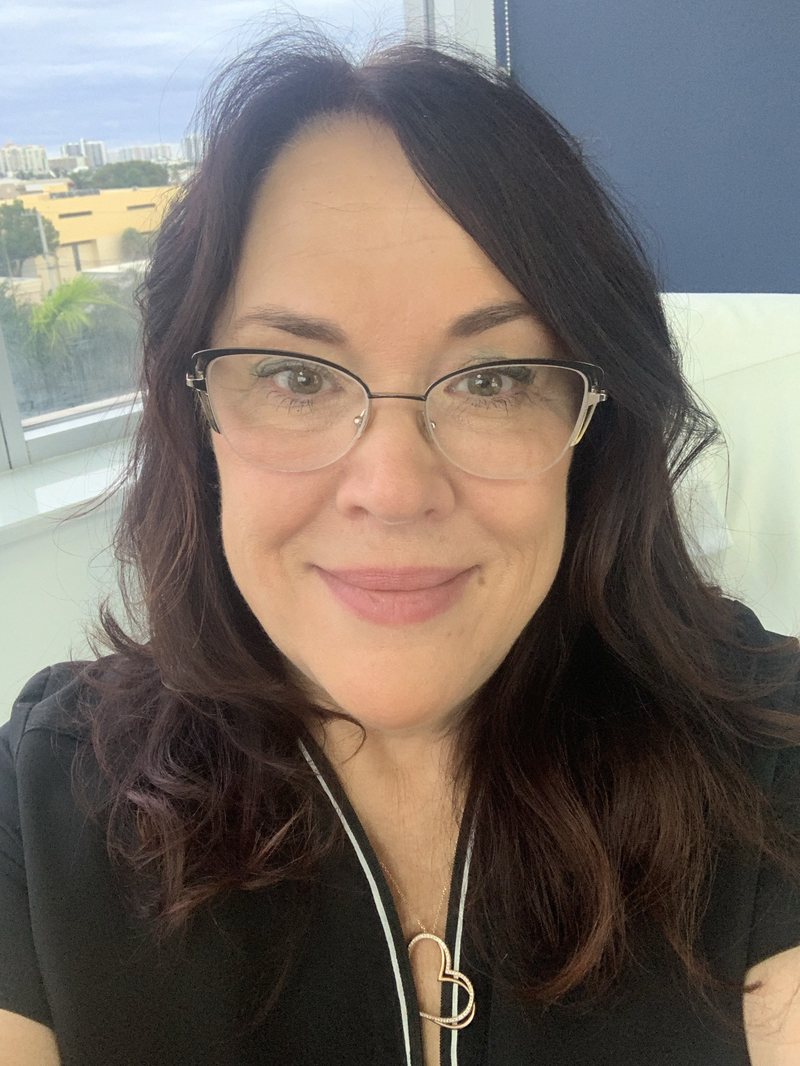
Susan Mitchell, AP
Clinical Director · 30+ years
There’s no fixed number of visits and no generic timeline. Your treatment frequency, therapy mix, and program length are set at your evaluation and adjusted at every visit based on how you’re actually responding.
How long you’ve had it and how far it’s progressed sets your starting intensity.
Visit frequency steps up or down based on your measured progress at each visit, not a preset week count.
Symptom relief, or a return to the things you miss: we define the finish line with you, not for you.
Candidacy comes first: the evaluation determines whether the program fits your case; cost is discussed in person after that.
Bring your current DMT and which symptoms affect you most day to day. We evaluate your case, including whether you’re not a candidate.
A plan built around your specific symptoms (fatigue, numbness, balance) and your current treatment. Progress is measured against your day-one baseline, not guessed, and the plan adjusts as you respond.
An afternoon without the crash. Steadier footing. Fewer days planned around energy you don’t have.

Groceries carried in, in one trip, without the math.
Energy left over at dinner.
A body that agrees with the scan for once.
Fatigue and mobility symptoms that go unaddressed tend to shrink what a day can hold, fewer errands, shorter outings, more naps. Supporting circulation and nerve function directly may help preserve function and energy day to day, alongside your disease-modifying therapy.
Your initial consultation is $45. Tell us your story, and we’ll evaluate your case.
Visit us
3471 North Federal Highway, Suite 500
Fort Lauderdale, FL 33306
Physicians
Physicians across Broward County refer patients here; a phone call is all it takes.
Book your first visit
We’ll confirm by call or text, usually the same day.
No referral required · We coordinate with your physician.