The center goes first
Blurred or distorted central vision, straight lines that appear wavy, a blank or dark spot in the center of your visual field, colors that seem less vivid, while peripheral vision typically stays intact.
Macular Degeneration
The straight lines that look wavy. The word you have to look slightly to the side of to actually read. You’ve been told to take AREDS vitamins and come back for monitoring visits. There is a different way to support macular health: support the circulation feeding the retina, coordinated with your ophthalmologist’s care.
Blurred or distorted central vision, straight lines that appear wavy, a blank or dark spot in the center of your visual field, colors that seem less vivid, while peripheral vision typically stays intact.
The books you read less. The faces you have trouble recognizing across a room. The unspoken fear about driving, and about how much more this could take.
For many patients, especially with dry macular degeneration, the standard plan is vitamins and monitoring visits to track change over time. Monitoring tells you where the disease is; it gives you nothing to do between visits. You deserve something active in the meantime.
The standard playbook for dry AMD is AREDS2 vitamins and monitoring visits, with injectable treatments reserved for the wet form once it progresses. What’s often missing is active support for retinal circulation and cellular health during the dry, earlier stages.
Many macular degeneration patients here are in the dry, earlier stages, coordinating vitamins and monitoring with their ophthalmologist. The work here is aimed at the supply side, circulation and cellular energy to retinal tissue, with your monitoring visits as the shared scoreboard.
The clinical logic: The acupuncture addresses the optic nerve pathway associated with visual processing. ATP Resonance BioTherapy® supports the retina’s cellular energy processes. O3 ReBoot Therapy® supports oxygen delivery and microcirculation to retinal tissue.
Nothing changes with your AREDS vitamins or injections except through your ophthalmologist. Physicians across Broward County send us macular degeneration patients for circulation and tissue support alongside their monitoring, and many patients simply send themselves. Ongoing monitoring and any wet-AMD treatment stay with your ophthalmologist.
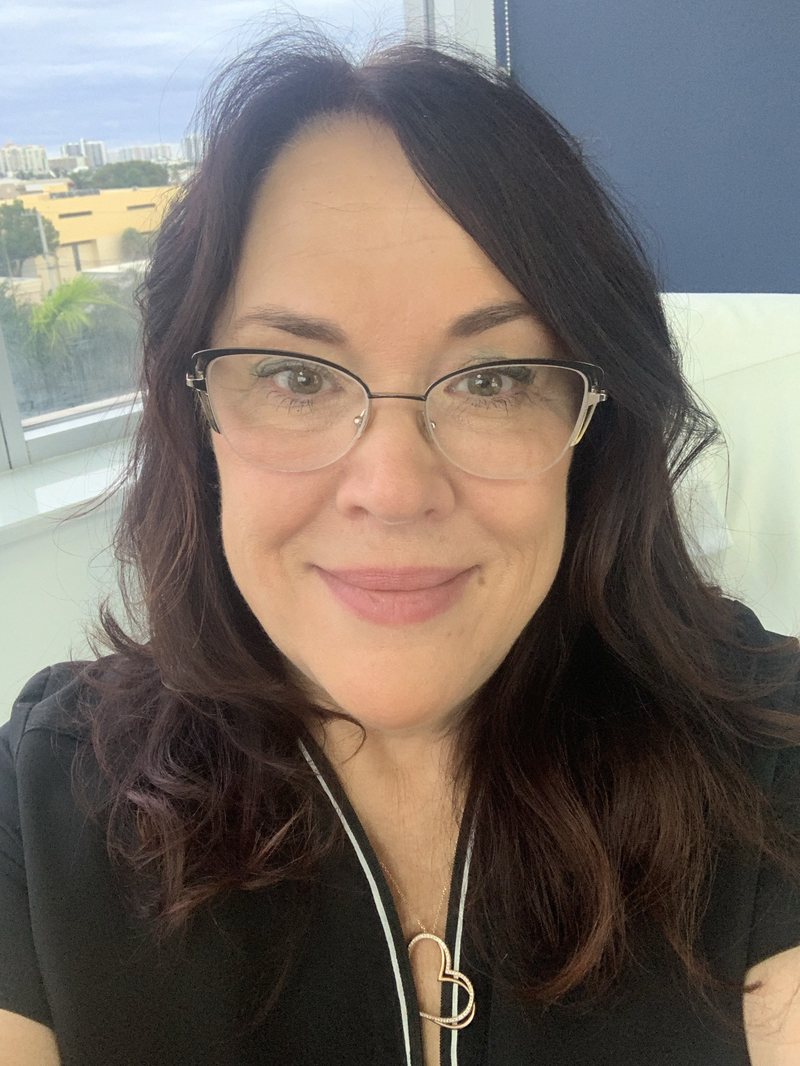
Susan Mitchell, AP
Clinical Director · 30+ years
There’s no fixed number of visits and no generic timeline. Your treatment frequency, therapy mix, and program length are set at your evaluation and adjusted at every visit based on how you’re actually responding.
How long you’ve had it and how far it’s progressed sets your starting intensity.
Visit frequency steps up or down based on your measured progress at each visit, not a preset week count.
Symptom relief, or a return to the things you miss: we define the finish line with you, not for you.
Candidacy comes first: the evaluation determines whether the program fits your case; cost is discussed in person after that.
Bring your ophthalmologist’s records if you have them. We evaluate your case, including whether you’re not a candidate.
A plan built around which stage you’re in and your current visual function.
Direct support for retinal circulation and eye health, staged and adjusted as you go.

A plan that starts now, not at the next appointment.
Attention paid to you, not only to the scan.
Something to do besides wait and see.
Progressive central vision loss affects reading, driving, recognizing faces, and everyday independence. Supporting retinal circulation and overall eye health is worth pursuing for its own sake.
Your initial consultation is $45. Tell us your story, and we’ll evaluate your case.
Visit us
3471 North Federal Highway, Suite 500
Fort Lauderdale, FL 33306
Physicians
Physicians across Broward County refer patients here; a phone call is all it takes.
Book your first visit
We’ll confirm by call or text, usually the same day.
No referral required · We coordinate with your physician.